United Kingdom - Blackburn
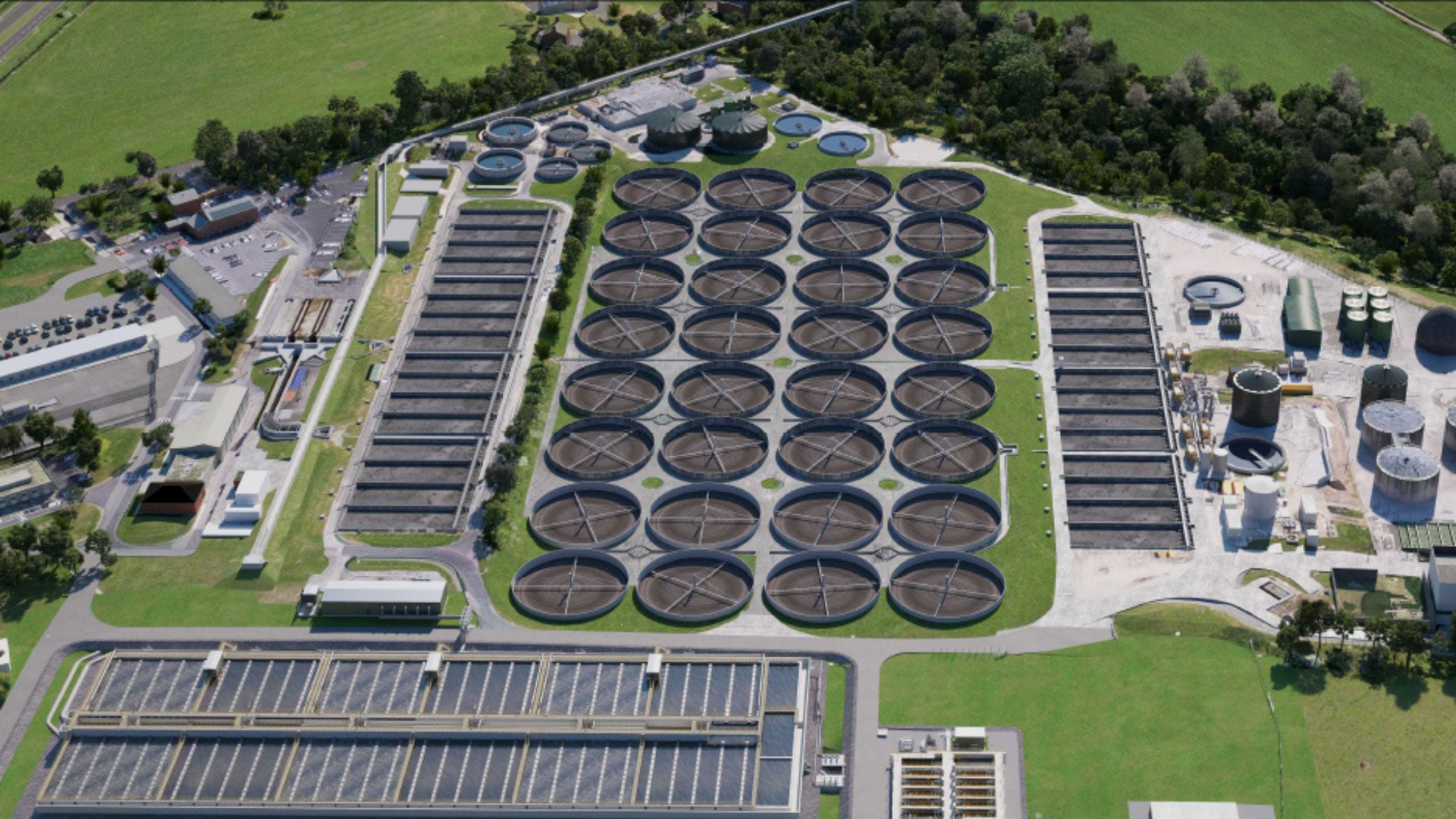
Europe’s largest purpose-built Nereda® process plant at Blackburn wastewater treatment plant (WWTP) at time of construction
0Dry Weather Flow
0Peak Flow
0PE (PE = 60 gBOD/d)
Projects facts
- Client
- United Utilities
- Project type
- Greenfield
- Location
- Blackburn, UK
- Wastewater
- Municipal
- Date
- 2021
- Process configuration
- Pre-treatment + Nereda + Cloth filtration + UV
About Nereda® at Blackburn Wastewater treatment works
Blackburn is a town in Lancashire, England, to the North of the West Pennine Moors on the southern edge of the Ribble Valley. It is 34 km north west of the city of Manchester.The challenge
As part of £100 million infrastructure upgrade, United Utilities identified a need to provide improved effluent quality to protect the bathing waters and shellfish waters at Blackburn, and replace the life-expired existing wastewater asset. The works also needed to be able to treat effluent from a nearby brewery and sludge return liquors from the on-site digestion plant.The solution
On behalf of United Utilities, construction partner LiMA selected Nereda technology to meet the stringent effluent quality requirements at this works. With its high-quality effluent standards and small footprint, the Nereda process provides United Utilities with an innovative, reliable, efficient and sustainable solution. The new plant works on gravity from the existing pre-treatment plant at Nabs Head, where it flows via an aqueduct to the main Blackburn works. At the works six 12,000 m³ Nereda reactor tanks have been installed, along with two sludge buffers for waste sludge thickening and a water level correction buffer. The Nereda reactors have the capacity to treat 321,500 p.e. with a peak flow of 12,053 m³ wastewater per hour.The outcome
The project was operational by March 2021 to meet statutory requirements and on completion was Europe’s largest purpose built Nereda installation to date. The new Blackburn installation treats the wastewater from Darwen, allowing the existing works to be decommissioned. The project has delivered improvements to the local watercourses that are tributaries of the River Darwen, which feeds into the River Ribble, and UV disinfection will protect downstream bathing and shellfish waters.The local benefits of the project

Improved wastewater treatment

Sustainable solution

Environmentally compliant

Enhanced capacity

Streamlined efficiency
