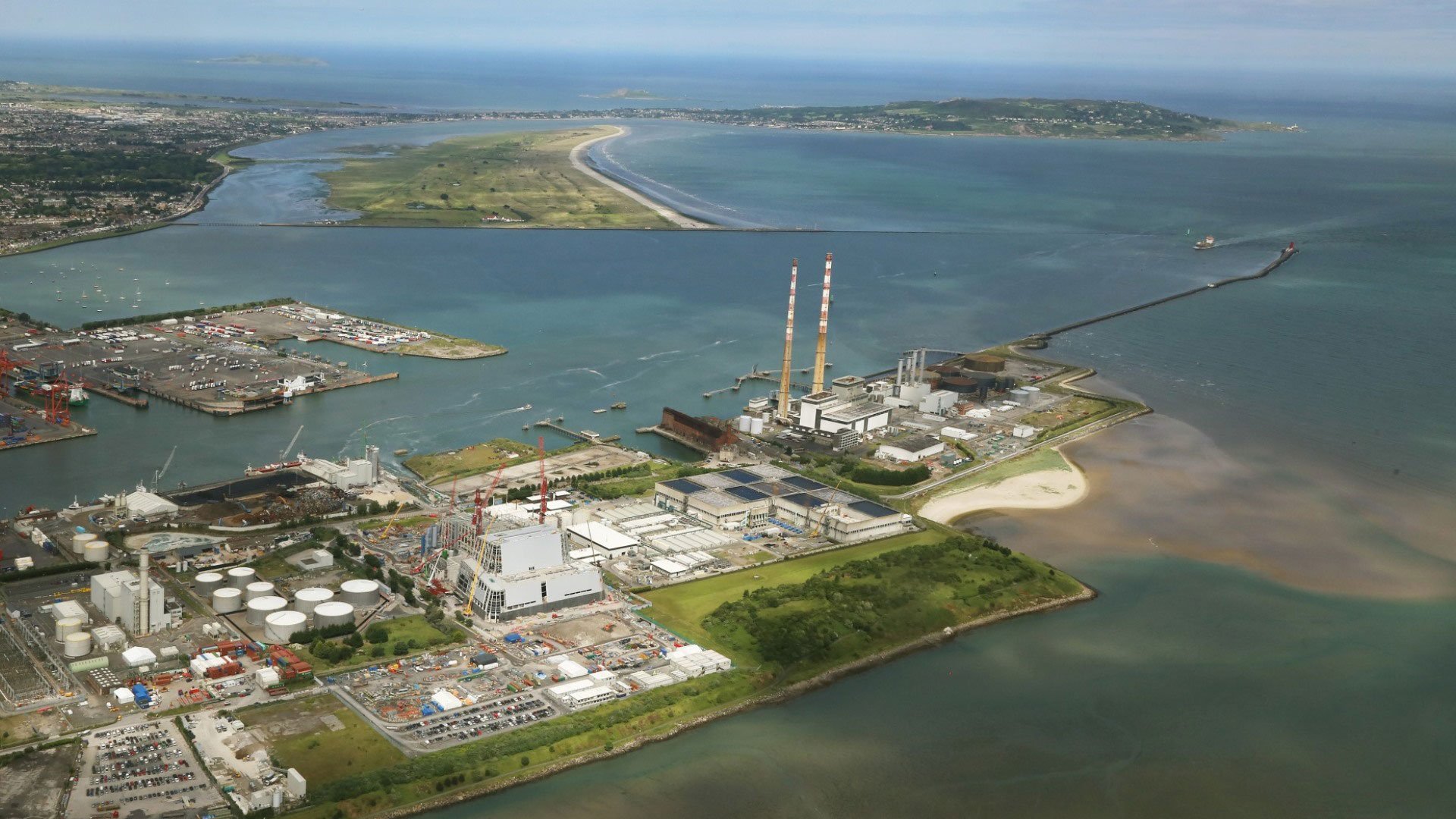
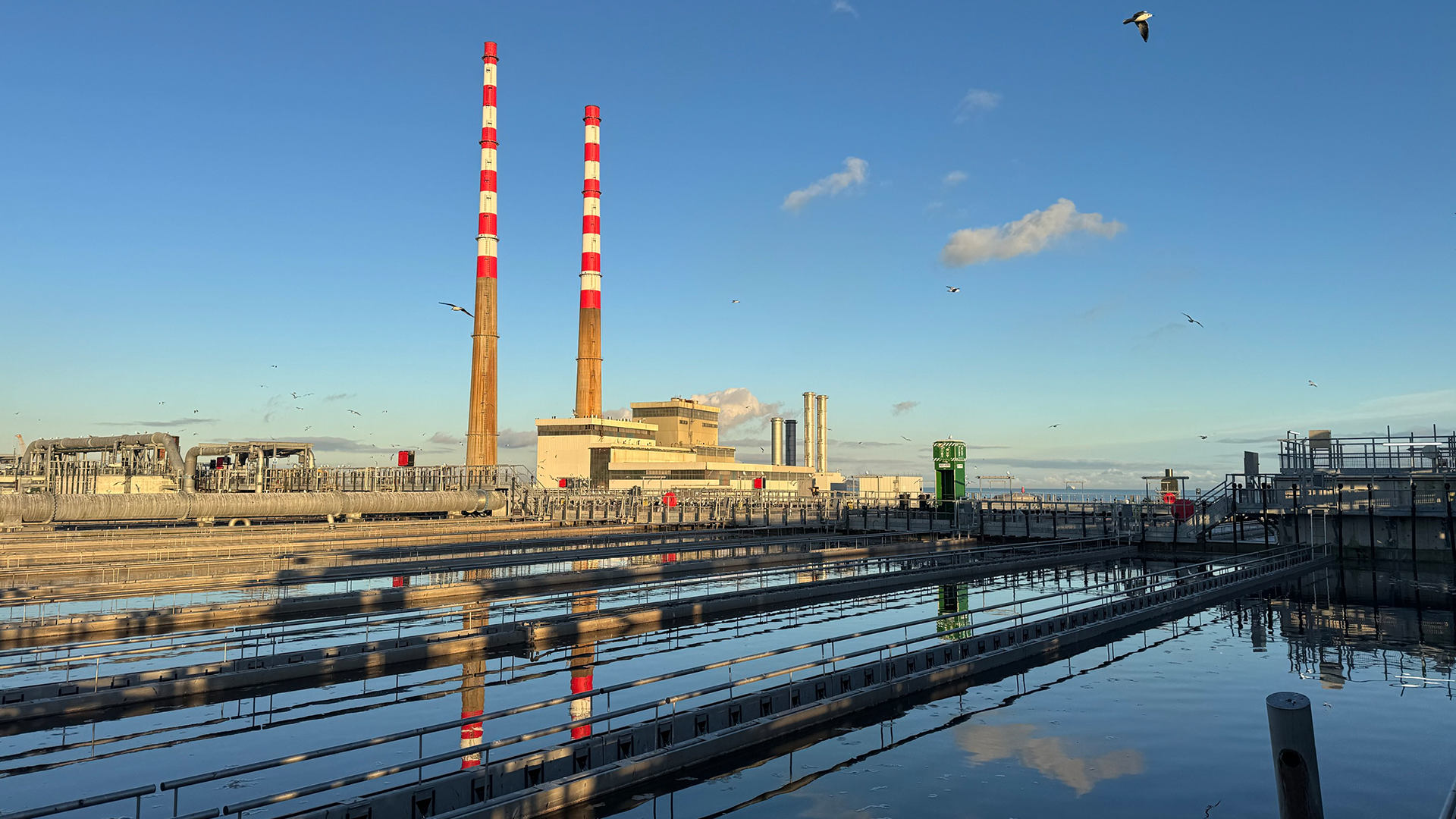
Ringsend WWTP: boosting capacity and performance on a constrained site
Project facts
- Client
- Uisce Éireann
- Location
- Dublin, Ireland
- Date
- 2014–2025
- Challenge
- Expand wastewater treatment capacity and effluent quality improvement on a constrained operational site
- Solution
- Adaptive consultancy using integrated Nereda and Ephyra technologies for capacity increase and nutrient removal
The challenge: Making a major upgrade fit a live, land-constrained plant
Ringsend receives more than 40% of Ireland's wastewater and is central to sanitation across greater Dublin. Demand was growing, discharge requirements were becoming more stringent, and the existing plant was approaching its practical limits.
Yet the peninsula site offered almost no space for conventional expansion. Its 24 stacked SBRs, each with a volume of 13,500 m3, also had to remain in service while contractors worked alongside the operator.
The project therefore needed a way to add biological and sludge-treatment capacity, improve nitrogen and phosphorus removal, and sequence construction without jeopardising day-to-day treatment.
The solution: Using existing assets differently, not simply building more
Rather than depend on a large new footprint, the biological upgrade paired Nereda aerobic granular sludge with Nereda Hybrid. Working for Uisce Éireann, Haskoning, T.J. O'Connor & Associates and Egis Engineering Ireland developed the upgrade with the plant operator.
Additional treatment was delivered through stacked Nereda reactors, while 12 lower-deck SBRs were upgraded with the hybrid concept instead of being completely reconstructed.Piloting and process proving guided each stage of integration with the operating plant.
The wider treatment train was upgraded at the same time: Ephyra increased sludge-digestion capacity by 50% in the existing digesters, supported by improvements to thermal hydrolysis, struvite recovery, UV disinfection, UF water treatment, sludge thickening, biogas treatment and energy generation.
This project was built on trust and collaboration over many years. Haskoning and their partners worked alongside us to deliver a complex upgrade safely, efficiently and without interrupting critical services
The result: Capacity and nutrient performance increased within the same site
The completed upgrade raised the plant's design capacity from 1.64 million PE to 2.4 million PE, with a hydraulic capacity of 13.8 m3/s.
Effluent performance now meets targets of total nitrogen below 10 mg/L and total phosphorus below 1 mg/L. Reusing existing SBRs and digesters limited the need for major new structures, while phased delivery kept Ringsend operational throughout construction - even with up to 300 people on site at peak.
Dublin now has a more resilient treatment facility that can support growth and better protect Dublin Bay.
Why Ringsend is a landmark Nereda reference

2.4 million PE within a constrained footprint

Nereda Hybrid reuses 12 existing SBRs
Designed for stringent nutrient limits

Conversion completed around live operations

Planning a new plant, upgrade or capacity extension? Contact our Nereda® specialists to discuss the right approach for your site.
How we Enhance Society Together
SDG 6
Clean Water and Sanitation: The Ringsend WWTP upgrade strengthens sustainable wastewater management for the greater Dublin area by increasing treatment capacity, improving nutrient removal and effluent quality, and helping the plant meet stringent EU wastewater standards. By protecting Dublin Bay and supporting reliable sanitation services, the project contributes directly to cleaner water and healthier communities.
SDG 7
SDG 9
SDG 11
SDG 12
SDG 13
Award recognition for innovation and collaboration
The upgrade of the Ringsend Wastewater Treatment Plant was shortlisted for the Global Water Awards' Wastewater Project of the Year 2026, recognising Uisce Éireann’s visionary leadership in delivering a landmark programme that successfully expanded one of Europe’s largest wastewater treatment facilities. At Haskoning, we are honoured to have contributed to a project of such scale and significance, and we are immensely proud of this recognition. This achievement highlights what can be accomplished when a utility works closely with stakeholders to implement innovative technologies and deliver lasting value for customers, communities, and the environment.
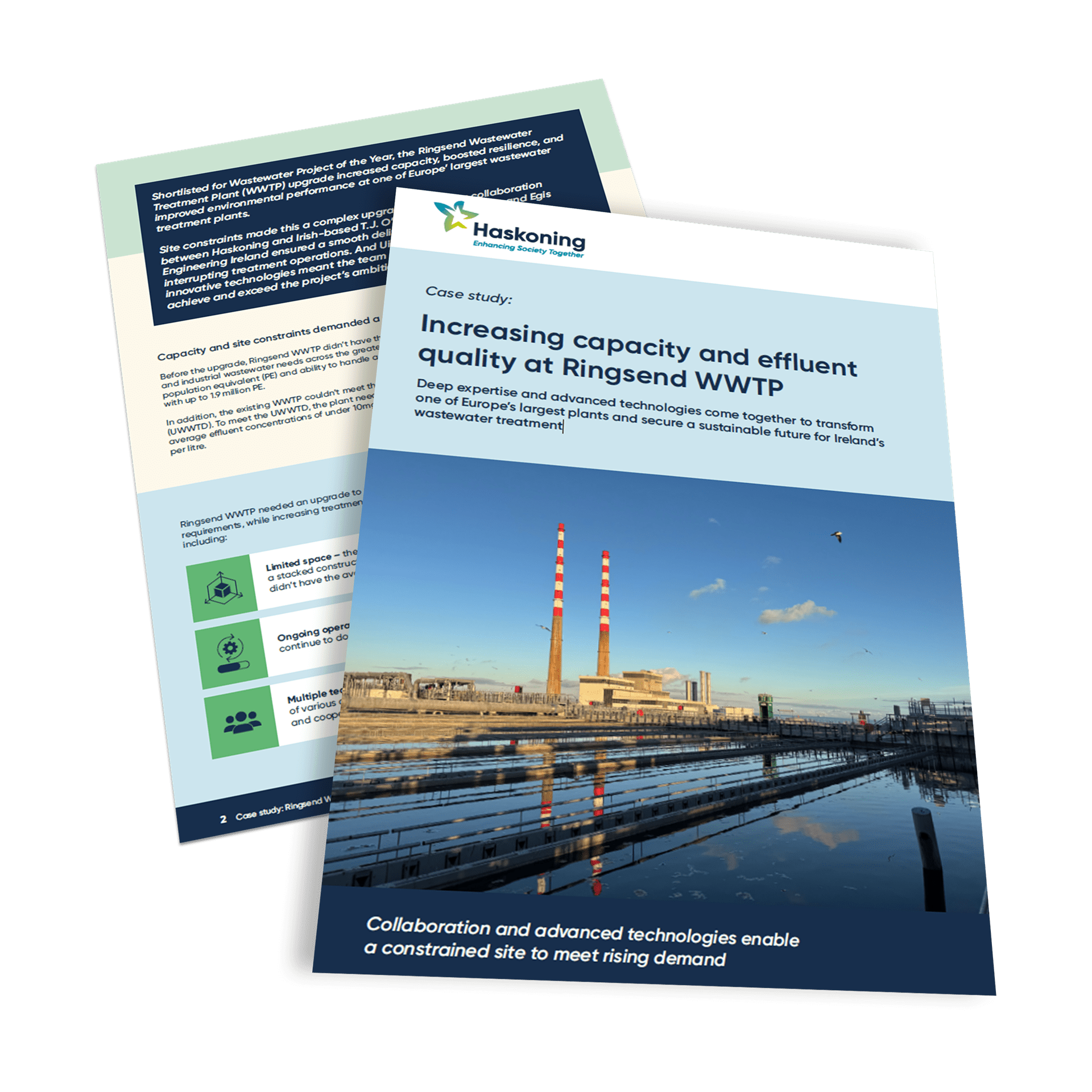
Increasing capacity and effluent quality at Ringsend WWTP
Deep expertise and advanced technologies come together to transform one of Europe’s largest plants and secure a sustainable future for Ireland’s wastewater treatment.